Why Everyone Is Ditching Boxy Sofas for Curved Furniture in 2026
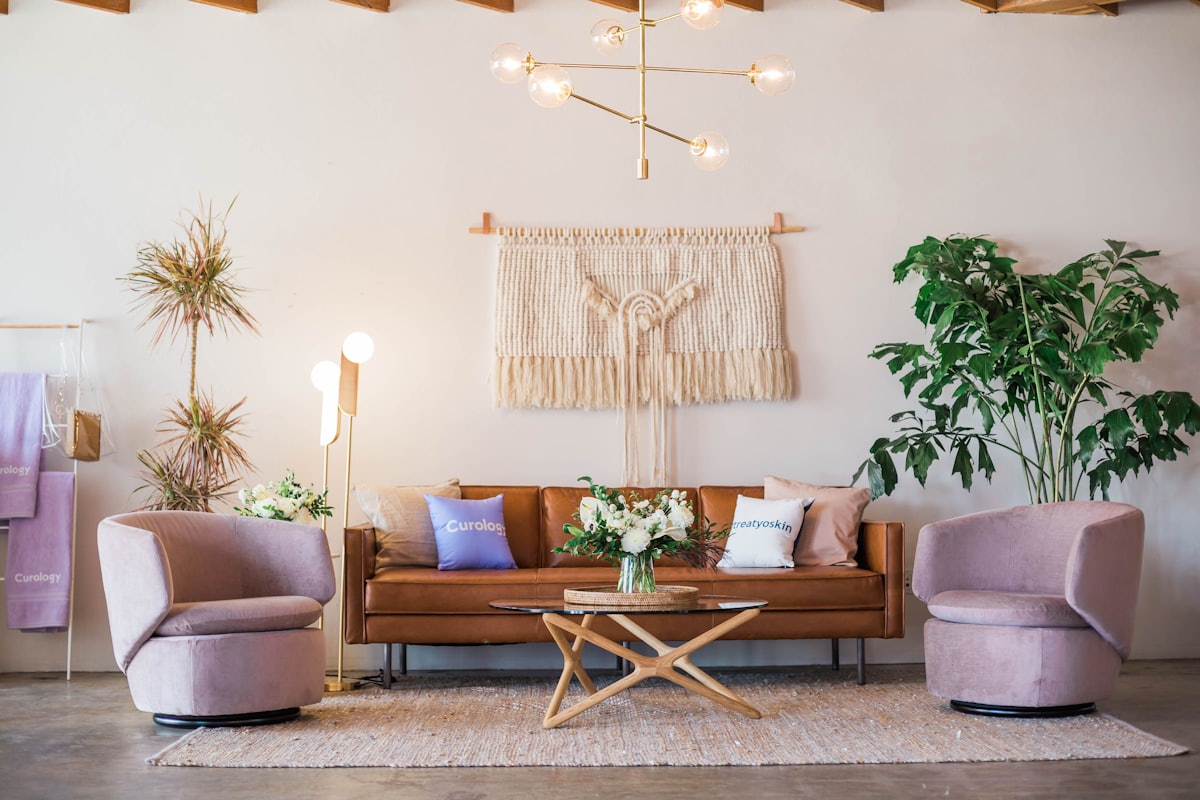
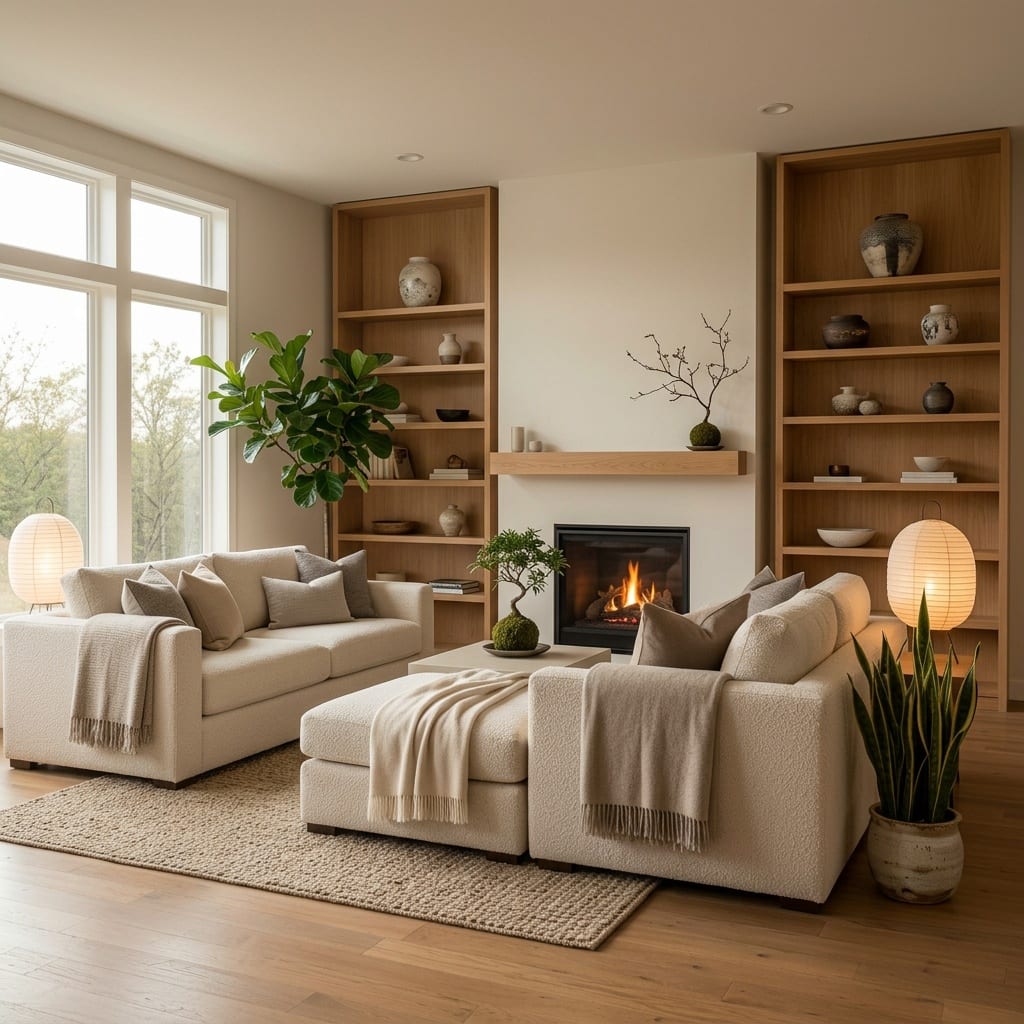
Every decade produces one furniture silhouette so dominant that it eventually becomes a timestamp. In the 1970s it was the deep modular pit. In the 1990s it was the overstuffed roll-arm. From about 2019 onward it was the low, wide, hard-edged box — square arms, tight square cushions, a back barely higher than the arms, usually in boucle or grey linen.
That shape is now the thing that dates a living room. Furniture trend reports for 2026 document a sustained climb in curved-furniture interest and a clear stated preference among homeowners for rounded silhouettes over sharp ones. This is not a fringe styling note; it is the mainstream direction of the market, and it means a lot of living rooms that felt current in 2023 are about to read as a specific moment.
Boxy sofas are not being replaced by curved ones wholesale — what is happening is that the extreme version of the box has become legible as a period. The correction is softer arms, higher backs, rounded corners and at least one genuinely curved object in the room. You do not need a curved sofa to get there; you need to break the grid once.
Why is curved furniture taking over in 2026?
The explanation is more architectural than fashionable, which is part of why the trend has stayed rather than spiked.
Look at what a room is made of. Walls meet at right angles. Windows are rectangles. Doors are rectangles. Kitchen cabinetry is a grid. Televisions, laptops, picture frames and bookshelves are all rectangles. In most homes, there is not a single non-orthogonal line anywhere.
Fill that with a rectangular sofa, a rectangular coffee table, a rectangular rug and a rectangular media unit, and you get a room that is technically well-furnished and quietly exhausting. Every element repeats the same geometry. Nothing gives the eye anywhere to rest.
A curve is the only thing most homes contain that is not a right angle. It is why a single round table can change a room out of proportion to its size, and why the trend survived the year it was supposed to peak in. This is also the practical takeaway: the effect comes from contrast, not from quantity. A room where every piece is curved is just a different kind of monotony, and it tends to look like a hotel lobby.
The second driver is tactile. The hard-edged sofa arrived alongside cool grey walls and minimalist styling, and it belonged to a moment that prized restraint. That moment is over across every category at once — warmer paint, handmade tile, textured wallpaper, layered drapery — and rounded furniture is the seating expression of the same shift.
What exactly is dating: the boxy sofa checklist
Not every straight-lined sofa is a problem. The version that reads as pre-2025 has a specific set of features, and it usually has most of them at once.
Very low overall height. Backs at or barely above arm height, seats close to the floor. It looks architectural in a photograph and is uncomfortable to sit upright in.
Square arms with sharp corners. Wide, flat, upholstered blocks. No roll, no taper, no slope.
Tight square seat cushions. Firm foam boxes with knife edges rather than a soft or feather-wrapped front.
Excessive width relative to the room. The trend encouraged buying the largest sofa a room could physically hold, which is why so many living rooms now have one enormous seating object and no circulation.
Boucle or grey linen upholstery. The two fabrics that dominated the same window and now carry it with them.
A plinth base or no visible legs. The sofa sits directly on the floor as a solid mass, which makes small rooms read smaller.
If yours ticks two or three of these, it is a structured contemporary sofa and it is fine. If it ticks all six, it is the silhouette everyone is currently moving away from.
Furniture in 2026: what is out and what is in
| Out | In |
|---|---|
| Low, wide sofas with square arms | Higher backs, rounded or sloped arms, softer fronts |
| Tight square knife-edge cushions | Feather-wrapped, softly rounded seat and back cushions |
| Rectangular coffee tables | Round, oval and kidney-shaped tables |
| Plinth bases sitting flat on the floor | Visible legs — turned, tapered or plinth with a reveal |
| Rectangular mirrors | Arched and full-round mirrors |
| Boucle in cream and grey | Velvet, chenille, wool, textured weaves in warm tones |
| Straight-edged rectangular rugs only | Round rugs, or rectangles softened by a curved table |
| Matching furniture suites | Mixed silhouettes — one curve against straight pieces |
How to introduce a curve without replacing the sofa
This is the part most coverage skips, and it is the part that matters, because sofas are the most expensive object in a living room and nobody should be replacing one over a silhouette trend.
Start with the coffee table. Swapping a rectangular coffee table for a round or oval one is the single highest-return change available. It breaks the grid at the exact centre of the room, it improves circulation because there are no corners to walk into, and it costs a fraction of any seating change. If you do one thing, do this.
Add an arched mirror. Vertical curve on a wall, cheap, and it works in a hallway or over a console as well as in the living room.
Bring in one curved chair. A single curved-back or barrel accent chair opposite a straight sofa reads as intentional mixing rather than as an incomplete set. It also softens the room’s silhouette without touching the main seating.
Round the lamp. A globe or dome shade on a floor lamp, or a curved arc lamp, adds a curve at eye level where it is actually noticed.
Soften the sofa you own. Rounded bolster cushions at the arms, a throw broken over one corner, and larger softer scatter cushions with feather inserts change the read of a boxy sofa considerably. This will not turn a hard-edged plinth sofa into a curved one, but it removes the severity.
The one that people get wrong is the rug. Swapping to a round rug in a rectangular room usually fights the architecture rather than softening it. Keep the rectangle underneath and let the curve happen at table height.
The clearance problem nobody mentions
Curved furniture has a practical constraint that product photography hides, and it is the reason a fair number of curved sofas end up regretted.
A curved back cannot sit flat against a straight wall. Push it back and you create a wedge of dead space at each end — visible, awkward, and impossible to use. Curved seating is designed to float: in the middle of a room, angled into a corner, or with a console behind it filling the gap deliberately.
Most rooms, particularly smaller ones, default to pushing everything against the walls. If that is your layout and it cannot change, a curved sofa will look wrong no matter how good the piece is. In that case, take the curve at table, mirror and lighting height instead and leave the seating straight.
This is exactly the kind of thing that is obvious in a room and invisible in a showroom. Testing the layout on a photo of your own living room is the cheap way to find out whether a curved piece has anywhere to live — you can see the same room with a round coffee table, with a curved chair in the corner, and with a floating curved sofa, and find out in a few minutes which of the three the space can actually take. The styles gallery covers the softer contemporary directions, and the themed worlds show rooms where the curve has been carried through the whole scheme rather than added as a single object.
Where the curve trend goes wrong
Three failure modes recur.
Too many curves. A curved sofa, a round table, a round rug, an arched mirror and a globe lamp in one room produces something closer to a soft play area than a living room. One or two curved elements against straight architecture is the whole point.
Curves at the wrong scale. A small curved chair in a large room disappears. An oversized curved sectional in a small one leaves no walkway. The curve does not exempt a piece from proportion.
Curves without texture. The original appeal of rounded furniture was warmth, and a curved sofa in flat grey fabric on a bare floor is still a cold room. The silhouette is half the change; the material is the other half.
The boxy sofa was never bad furniture. It was a good idea that got bought too many times, in too few fabrics, in too many rooms at once. The correction is not to replace it — it is to stop the room from repeating the same rectangle in every direction.
FAQ
Are boxy sofas out of style in 2026?
The extreme version is. Very low, very wide sofas with square arms and tight square cushions — the silhouette that dominated from roughly 2019 to 2024 — now read as a specific era. Structured sofas with softer arms, higher backs and turned legs are not affected.
Why is curved furniture so popular right now?
Rooms are made almost entirely of straight lines — walls, windows, doors, cabinetry, screens. A curve is the only element in most homes that is not orthogonal, so it reads as intentional and as softer, which is what people are after after several years of hard minimalism.
Do I need a curved sofa to get the look?
No. One curved element per room is usually enough to break the grid. A round coffee table, an arched mirror, a curved-back chair or a rounded floor lamp all do the job at a fraction of the cost and commitment.
Does curved furniture work in a small living room?
It can, but not against the wall. Curved backs leave a wedge of dead space when pushed flat against a straight wall, so they need to float or sit in a corner. In a small room the safer curved pieces are the tables, mirrors and single chairs rather than the sofa.
Keep reading