Is Subway Tile Outdated? The Zellige Look Everyone's Switching to in 2026
For about a decade, subway tile was the answer to every backsplash question. It was inexpensive, it was safe, it was on every renovation show, and choosing it meant you never had to have an opinion about tile. That convenience is exactly what has caught up with it.
According to AOL’s design coverage, subway tile has crossed into outdated territory — not because the tile is badly made, but because one specific execution of it got installed in millions of kitchens and bathrooms, and repetition at that scale turns a neutral choice into a date stamp. Tile-industry trend guides for 2026 are close to unanimous about the successor: handmade zellige.
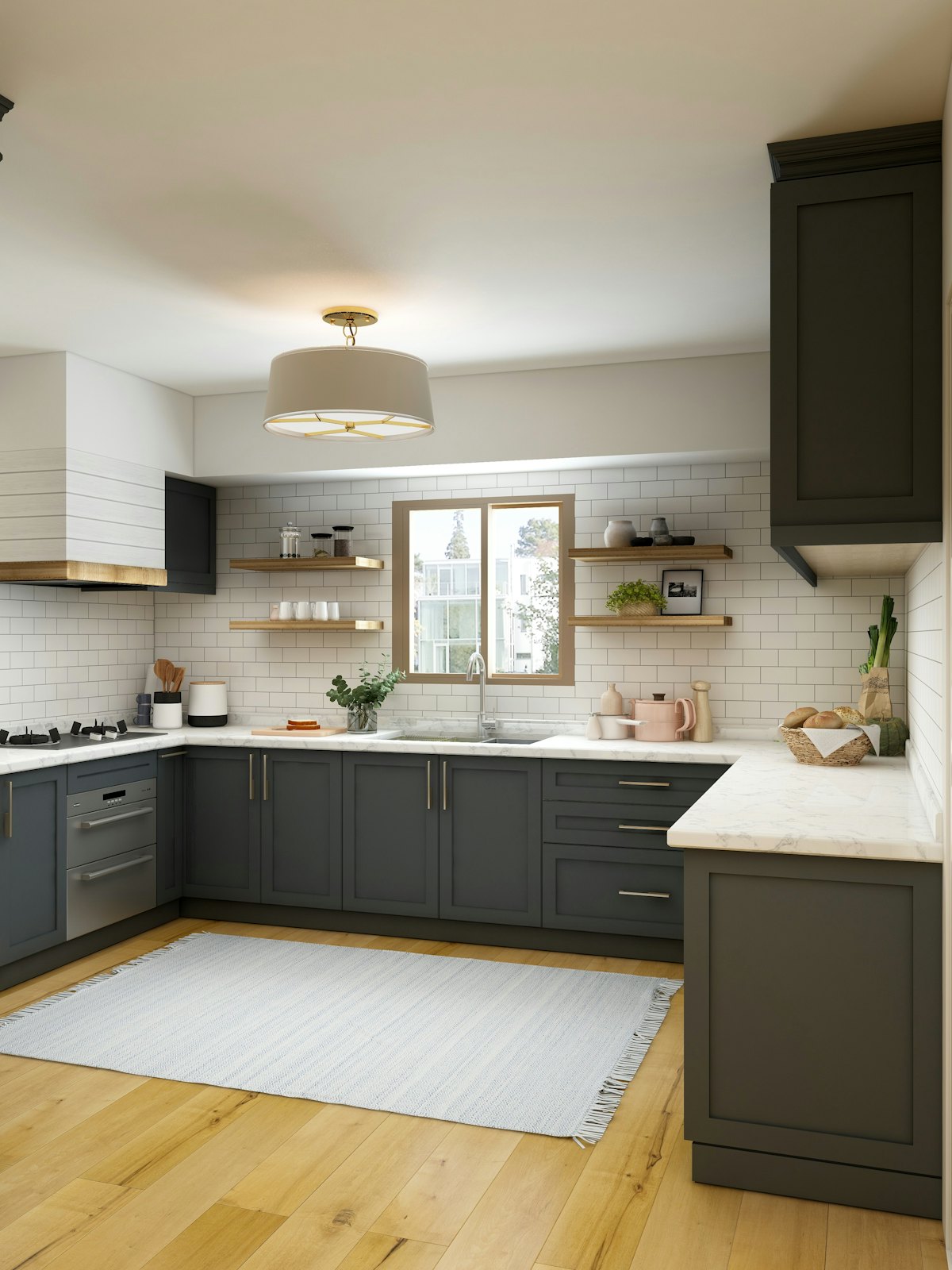
Subway tile is not banned in 2026, but the default version of it — glossy, machine-perfect 3x6 white rectangles laid in running bond with dark contrasting grout — now reads as builder-grade. The replacement designers name most often is handmade zellige, along with stacked and vertical layouts, matte and hand-glazed finishes, and grout matched to the tile rather than set against it.
Is subway tile out of style in 2026?
Precision matters more here than the headline does, because the answer is not a straight yes. What has dated is a combination of three decisions that almost always travelled together:
Glossy machine-made 3x6 white tile. Every piece identical to every other piece, flat as a printed page, reflecting light in a single uniform sheet.
Running bond used by default. The offset brick layout is fine on its own. It became a tell because nobody chose it — it was simply what the tiler did unless told otherwise.
Contrasting grout. The dark grey or charcoal line that read as graphic and confident in 2016. Ten years on, it reads as a grid drawn over your wall.
Any one of these alone survives. Stacked together they produce a backsplash that dates a kitchen to roughly 2014 through 2021 as reliably as a colour does. It is the tile equivalent of cool grey plank flooring: nothing wrong with it, just entirely legible as a period.
The good news buried in that is what it excludes. Subway tile in a stacked vertical layout, in a matte or hand-glazed finish, in a colour, or with grout matched to the tile is not on anyone’s out list. The format is not the problem. The autopilot is.
What is zellige, and why is it the named replacement?
Zellige is hand-cut glazed terracotta tile, traditionally made in Fez, Morocco, and it is close to the opposite of a factory tile in every property that matters visually.
Each piece varies in thickness. Edges are slightly irregular, so the joints between tiles are not perfectly parallel. The glaze pools and thins across the surface, which means a single wall of one colour still shifts in tone from tile to tile. Pinholes, crazing and small surface flaws are not defects in zellige; they are the reason people buy it.
The practical effect is about light. A glossy machine tile reflects daylight as a flat sheet, which is why subway backsplashes look so uniform in photographs and so lifeless in person on a grey afternoon. A zellige wall breaks that reflection into hundreds of slightly different angles, so the surface changes through the day and moves as you move past it. In a kitchen — a room with hard surfaces, straight lines and usually one light direction — that is the quality that has been missing.
This also explains why the trend has legs beyond a season. It is not a shape or a colour that can be replaced by the next shape or colour. It is a swap from machine-uniform to hand-variable, and once a kitchen has that quality, going back to a flat grid feels like a downgrade.
Tile in 2026: what is out and what is in
| Out | In |
|---|---|
| Glossy white 3x6 in running bond | Zellige and other handmade-look glazes |
| Dark contrasting grout | Tonal grout matched to the tile |
| Backsplash stopping at the upper cabinets | Full-height tile to the ceiling or hood |
| Perfectly uniform machine finish | Visible variation, pooling glaze, irregular edges |
| Cool grey and stark white palettes | Warm whites, clay, olive, oxblood, unglazed terracotta |
| Bevelled edge subway | Flat or hand-formed edge, square and thin-brick formats |
| Tile as a neutral backdrop | Tile as the room’s one textural event |
Two entries there are worth pulling out. Full-height tile — running the material to the underside of the upper cabinets and then continuing behind the hood to the ceiling — is doing as much work as the tile change itself. Stopping the tile at an arbitrary line halfway up the wall is a cost-saving convention that has started to look like one.
And tonal grout is the sleeper. Matching grout to tile removes the grid and lets the wall read as a single textured surface. It is what makes zellige look like zellige rather than like small irregular subway tile, and it is the reason some zellige installations look expensive while others look busy.
Do you have to rip out the subway tile you already have?
No, and the honest advice here is unusual, because the cheapest fix is also the most effective one.
Regrout in a matching tone. If your backsplash is white tile with charcoal grout, regrouting in a warm white or pale grey removes most of what dates it. The tiles stop being a diagram of themselves and start being a wall. This is a weekend job on a standard backsplash, it costs a fraction of retiling, and it is reversible in the sense that nothing structural is disturbed.
Take the tile higher. If you are already committing to work, running the existing tile up to the ceiling in one section — behind the hood, behind the range, up a single wall — modernises the kitchen more than swapping the tile format at the same height.
Change what surrounds it. A subway backsplash reads as dated partly by association: it usually arrived alongside grey cabinets, cool white quartz and brushed nickel. Warm the cabinet colour or swap the hardware to unlacquered brass or aged bronze, and the same tile reads as classic rather than as builder-spec.
Retile only the one that gets looked at. Very few kitchens need the whole backsplash replaced. The wall behind the range, or the visible run facing the living space, carries the impression. The strip behind the toaster does not.
What the zellige look actually costs
Zellige is priced and installed like a handmade material, and pretending otherwise sets people up for an unpleasant quote. It runs substantially higher per square metre than standard ceramic subway, and the installation is slower because the pieces are irregular — a good tiler is making judgement calls about spacing on every course rather than dropping in spacers. Wastage is higher too, since colour variation means some pieces get set aside.
That is the argument for using it in one concentrated place rather than everywhere. A zellige splash behind the range, with simpler tile or plaster elsewhere, delivers nearly all of the effect at a fraction of the material.
If the budget will not stretch, the machine-made zellige-look ranges from mainstream tile suppliers have improved considerably. They will not have the depth of the real glaze, but with tonal grout and a stacked layout they land far closer to 2026 than glossy white with dark grout does.
How to tell whether yours is dating your kitchen
Stand at the door of the kitchen — not at the counter — and look at the backsplash the way a stranger would in the first three seconds.
Ask three questions. Does the grout draw a visible grid from across the room? Does the tile surface reflect light as one flat plane? Does the tile stop at a horizontal line partway up the wall for no apparent reason? Three yeses means the backsplash is doing the dating, and the tile format is only one of the three culprits.
This is also the point where most tile decisions go wrong, because a tile sample is a tiny object and a backsplash is a continuous surface. Four zellige pieces in your hand look charming. Four square metres of the same glaze in a north-facing kitchen can read as murky, or as far busier than you expected. Sample boards do not tell you this. The wall does.
Photographing your own kitchen and applying the finishes to it is the only cheap way to test that. You can run the same room through a zellige-heavy scheme, a tonal-grout version of the subway tile you already have, and a full-height stacked layout, and see which of the three actually changes the room — often it is the free one. The styles gallery covers the tile-forward directions, and the themed worlds show where each one ends up when the cabinetry and hardware follow it through.
Subway tile was never a mistake. Choosing it without deciding anything was. The 2026 correction is not really about Morocco or terracotta — it is about a wall that shows the hand that made it, in a room that is otherwise made entirely of straight machine lines.
FAQ
Is subway tile out of style in 2026?
The standard version is. Glossy machine-made 3x6 white tile laid in running bond with dark contrasting grout now reads as a specific renovation era. Subway tile in stacked or vertical layouts, in matte or hand-glazed finishes, or with tonal grout still looks current.
What is zellige tile?
Zellige is hand-cut glazed terracotta tile traditionally made in Fez, Morocco. Every piece varies slightly in thickness, edge line and glaze depth, so a finished wall shifts in tone and catches light unevenly instead of reading as a flat grid.
What is replacing subway tile in kitchens?
Zellige leads, followed by other handmade-look formats: square tile, elongated thin brick, scalloped and fish-scale shapes, and slab or full-height stone backsplashes. All of them share one quality — visible variation rather than machine repetition.
Do I have to replace my subway tile backsplash?
Usually not. Regrouting in a tone close to the tile colour removes most of the dated grid effect for a fraction of the cost of retiling, and it is the single highest-return change on an existing subway backsplash.
Keep reading